- (828) 200-0826
- (828) 335 1950
- cuevaswnctreeservice@yahoo.com
- Otto, NC & Clayton, GA
- Monday to Friday 8:00 - 17:00
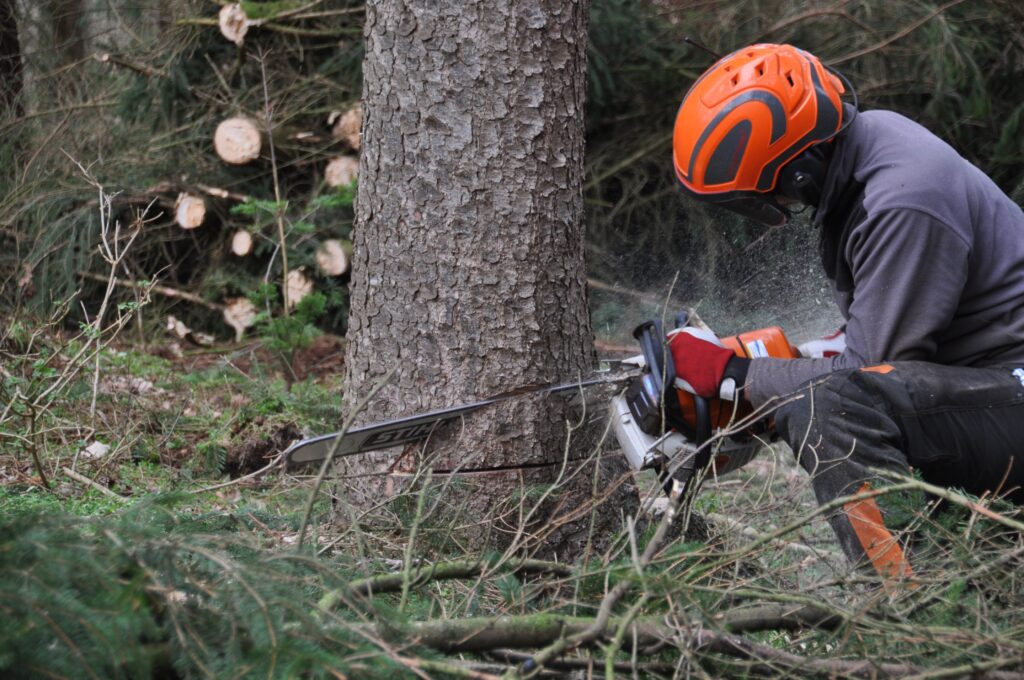
Severe storms can leave behind more than just fallen branches and debris—your trees may have hidden damage that puts your home, vehicles, and family at risk. Identifying warning signs early can prevent accidents and costly property damage. Here’s how to tell if a tree has become hazardous after heavy wind, rain, or lightning.
Healthy trees can have a natural lean, but after a storm, a new or increased lean is a major red flag.
Look for:
A tree that suddenly tilts toward your home
Soil mounding or cracking around the base
Exposed or lifted roots
A tree leaning after a storm often means its root system has been weakened and may fail without warning.
Storms can snap branches that remain loosely attached—these are known as “hangers” or “widowmakers.”
These branches can fall at any moment, especially with a light breeze. Warning signs include:
Cracked limbs
Split branches
Branches lodged high in the canopy
Removing them quickly is essential to maintain safety.
The trunk is the main support structure of the tree.
After a storm, inspect for:
Vertical cracks
Deep splits
Bark peeling away
Holes or cavities that look newly exposed
Structural cracks indicate serious internal damage and may mean the tree is no longer stable.
Roots anchor the entire tree. Even if a tree appears healthy above ground, the root zone might have been compromised.
Signs of root failure include:
Soil pulled up on one side
Exposed roots
Ground that appears soft, loose, or sinking
Fungal growth around the base
If roots are damaged, the tree can collapse with little notice.
Storm damage often exposes or worsens existing issues. Check for:
Mushrooms growing on the trunk or at the base
Hollow or soft wood
Large sections of missing bark
Deadwood throughout the canopy
A diseased or decayed tree has a much higher risk of falling after storms.
Lightning can severely weaken a tree—even if it doesn’t fall immediately.
Common signs include:
Bark stripped in a vertical line
A long, charred crack
Leaves turning brown shortly after the storm
Trees hit by lightning often die slowly and become unstable over time.
Any tree that is touching or close to power lines after a storm is an immediate hazard.
Do not try to trim or remove it yourself. Contact your local utility company or a professional tree service right away.
If you notice any of the warning signs above, it’s best to have the tree inspected by a certified professional. Attempting to cut or remove a damaged tree on your own can be extremely dangerous.
A trained team can:
Evaluate the tree’s structural integrity
Determine whether it needs pruning, bracing, or removal
Safely handle hazardous limbs or fallen trees
Prevent future risks to your home and property
Storm-damaged trees may look stable at first glance, but hidden issues can turn them into serious hazards. Taking the time to inspect your property and calling a professional for an assessment keeps your family safe and your home protected.
We are highly trained and adhere to all current tree industry legislation with over 15 years of experience in all tree care related matters.
We have the tree surgery expertise you need. Our extensive knowledge of tree care is what you’re looking for. If you want a tree surgeon you can trust, we’re ready to help. Our excellent service is available for less than you think.